Equipment and testing
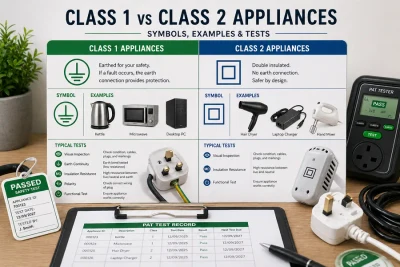
Class 1 vs Class 2 Appliances: Symbols, Examples & Tests
Understand Class I and Class II protection, use manufacturer markings to identify equipment and choose suitable checks without guessing from plugs or casings.
Advice, practical guides and resources for people learning about PAT testing and those already carrying it out.
Understand Class I and Class II protection, use manufacturer markings to identify equipment and choose suitable checks without guessing from plugs or casings.
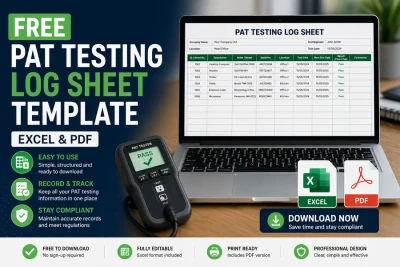
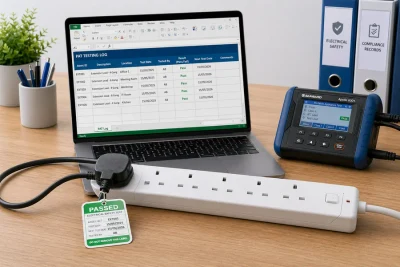
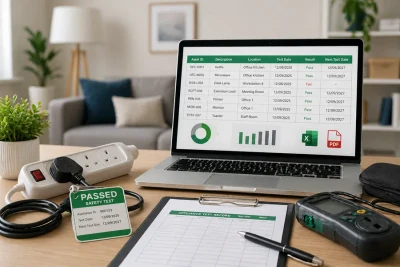
Download our free PAT testing record sheet in Excel and PDF format, plus a clear guide to what records you need to keep and how long to store them for.
Compare the cost of a PAT testing service with in-house testing. Understand scope, minimum fees, VAT, staff time and illustrative budgeting examples.
Build a PAT testing quote using your costs, travel, job scope and margin. Includes illustrative pricing calculations, minimum fees and VAT considerations.
Choose inspection and testing intervals from equipment, use, environment and previous findings. Includes HSE guidance and the IET frequency-table clarification.
Plan a PAT testing business around competence, equipment, records, insurance and customers, with illustrative budgets rather than guaranteed earnings.
The short answer might surprise you. A clear breakdown of UK PAT testing law, HSE guidance and exactly when you're legally on the hook.
Plan PAT tester calibration and verification using manufacturer instructions, equipment condition and applicable requirements. Understand the records to keep.
Organise workplace electrical maintenance with suitable checks, competent staff, defect reporting and records that reflect your equipment and risks.
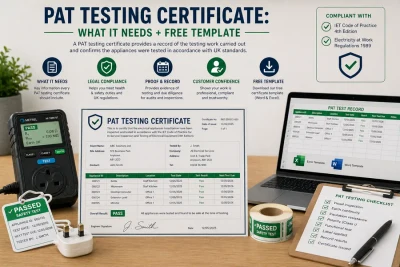
Use a suggested appliance-test report template and understand its purpose, useful fields, retention and the difference from a learner training certificate.
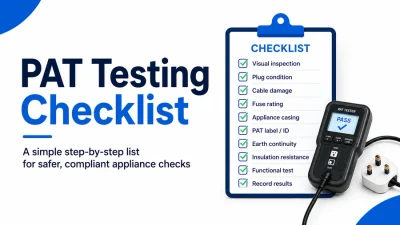
A planning checklist for PAT work: preparation, visual inspection, selecting suitable tests, handling defects and keeping useful records.
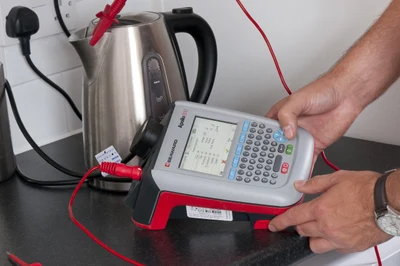
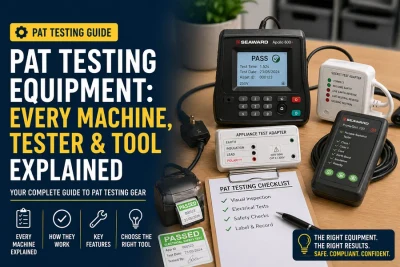
Confused by PAT testers, tags, software and calibration kit? A plain-English breakdown of every bit of PAT testing equipment and what it actually does.
Understand landlord appliance-maintenance duties by nation and tenure, including Scotland, England social housing, licence conditions and risk-based checks.
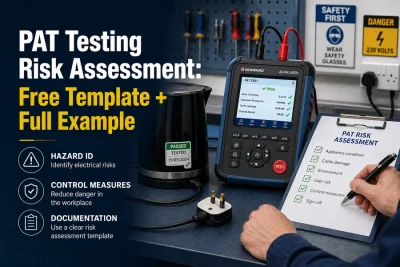
Use an illustrative in-page risk assessment to plan the actual job. Covers hazards, controls, recording duties and when to review the assessment.
The truth about the 'competent person' rule, what qualifications you really need, and why you probably don't need a qualified electrician to do PAT testing.
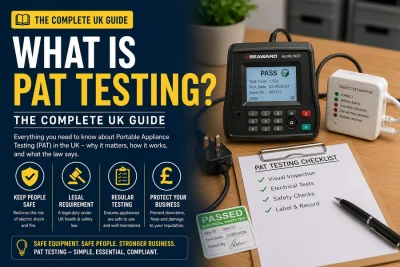
PAT testing explained simply: what it is, who actually needs it, how often it's required and what it costs. Everything you need to know in one guide.
Build an electrical-equipment maintenance inventory, from kettles and computers to leads and fixed equipment. Understand which checks depend on risk.
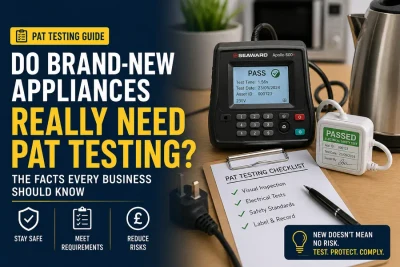
Buying new kit doesn't always mean skipping the test. What the HSE and the law actually say about PAT testing new, unused and second-hand appliances.
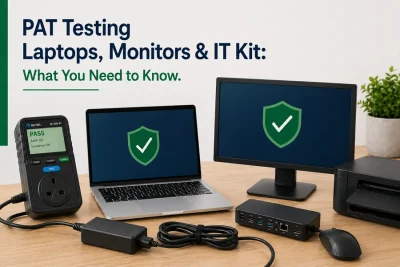
Plan suitable checks for computers, monitors, chargers and mains leads. Identify the actual protection class, assess risk and coordinate sensitive IT maintenance.
Understand handheld, portable, movable, stationary and fixed equipment, and when fixed or three-phase work needs additional specialist competence.
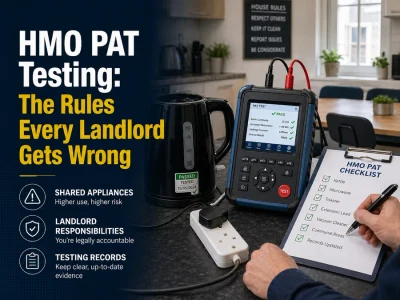
Check the electrical-maintenance rules and licence for your HMO. Covers shared equipment, records and why a single annual interval cannot be assumed UK-wide.
Plan electrical maintenance for holiday lets and Airbnb accommodation. Distinguish Scottish licensing duties, local conditions, insurance terms and practical checks.
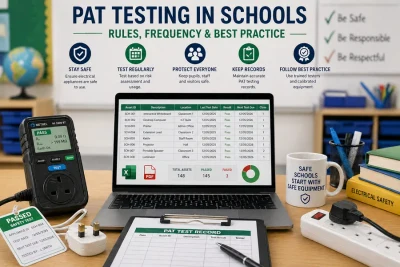
Plan school electrical maintenance around pupil use, equipment risks and safe access. Covers inspection intervals, competence and specialist equipment.
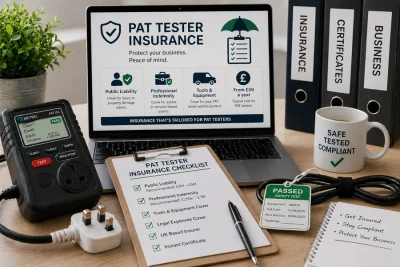
Compare public liability, professional indemnity and equipment cover. Separate legal duties from contract terms and get a quote for your actual PAT work.
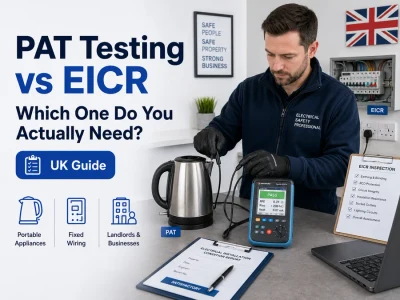
They sound similar but test completely different things. What a PAT test covers, what an EICR covers, and when you genuinely need both.
How to include extension leads, cable reels and adapters in a risk-based maintenance plan, with equipment-specific testing and practical damage checks.
Straight talk for homeowners — when PAT testing actually applies to you, when it doesn't, and simple electrical safety checks anyone can do.
Understand care home electrical safety data, the limits of national fire totals, equipment maintenance and the responsibilities of care providers.
Read construction electrical safety statistics in context, with guidance on portable tools, site supplies, overhead lines and risk-based maintenance.
Find reliable electrical accident data and understand reporting scope, injuries, fire statistics and the limits of portable appliance testing.
Understand electrical fire statistics, with verified England data for 2025/26 and clear distinctions between ignition sources, causes and appliance faults.
Understand the limits of rental fire statistics, the difference between EICR and appliance checks, and England and Scotland landlord requirements.
Put office electrical safety figures in context and plan proportionate checks for IT equipment, kitchens, personal appliances and hybrid working.
Understand what PAT testing statistics can show, how to calculate your own failure rate and why maintenance decisions need more than national fire totals.
Understand school fire data without mixing periods or populations, and plan electrical maintenance for classrooms, laboratories, workshops and kitchens.
What official fire-cost research can tell businesses, what it cannot, and how to assess property damage, downtime, insurance and prevention costs.
Use workplace electrical safety data correctly, distinguish accident and fire statistics, and organise a practical maintenance and reporting programme.
Try a shorter search, such as “equipment”, “landlord” or “records”.
Put the process into practice on a one-day PAT testing course.